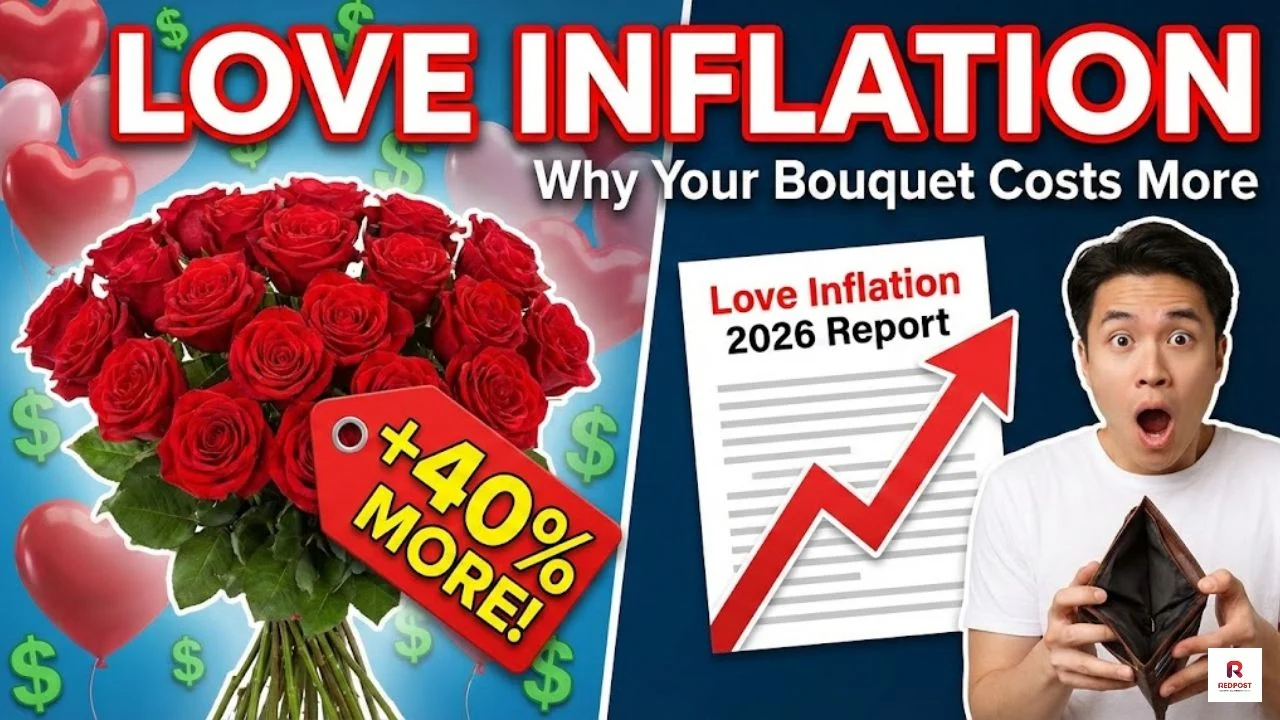
Love Inflation- If you’re planning to say it with flowers this February 14th, your wallet might feel the sting before your heart feels the flutter. The classic dozen red roses, once a predictable romantic staple, has seen a staggering 40-60% price surge in 2026, leaving many to wonder if Cupid has traded his bow for a calculator.
The Perfect Storm: Why Prices are Blooming
Data from the 2026 Global Floral Outlook suggests that “Love Inflation” isn’t just a catchy phrase; it’s a result of a complex supply chain squeeze.
While demand remains at record highs—with total Valentine’s spending projected to hit $29.1 billion this year—the supply side is struggling to keep pace. Key factors driving the spike include:
- Climate Volatility: Erratic weather patterns in major export hubs like Colombia and Kenya have disrupted harvest cycles, leading to a “thinner” crop of premium long-stem roses.
- The Logistics Tax: Rising fuel surcharges and a shortage of refrigerated air-freight capacity have added a “transport premium” to every stem flown into the country.
- Labor Costs: Increased fair-wage mandates in South American flower farms, while ethically necessary, have naturally pushed up the wholesale floor price.
Red Roses vs. The “Eco-Conscious” Shift
Interestingly, the price hike is most aggressive for traditional red roses, which still account for nearly 70% of Valentine’s sales. Retailers are seeing individual sticks jump from an average of ₹35 to over ₹100 in urban centers.
However, a “K-shaped” spending trend is emerging. “We are seeing a massive shift toward mixed exotic bouquets,” says a senior analyst at InvestorsObserver. “Gen Z and Millennial buyers are opting for lilies, orchids, and even dried floral arrangements that offer better longevity and a lower carbon footprint for the same price.”
How to Beat the 2026 Price Hike
You don’t have to cancel your romantic plans, but you do need a strategy. Experts recommend:
- The “Eve” Advantage: Buy your flowers 2-3 days early. Prices typically peak 48 hours before the 14th.
- Go Local & Seasonal: Opt for seasonal blooms like anemones or magenta tulips, which avoid the heavy “import tax” of out-of-season roses.
- The Potted Alternative: A potted orchid or hydrangea lasts months longer than a cut bouquet and often costs 30% less.
Takeaway: This year, the most romantic gesture might not be the most expensive one. Focus on personalization over prestige—a hand-picked, seasonal arrangement tells a better story than an overpriced, inflation-hit rose.
ALSO READ
Why Governments Worldwide Are Cracking Down on Social Media Platforms