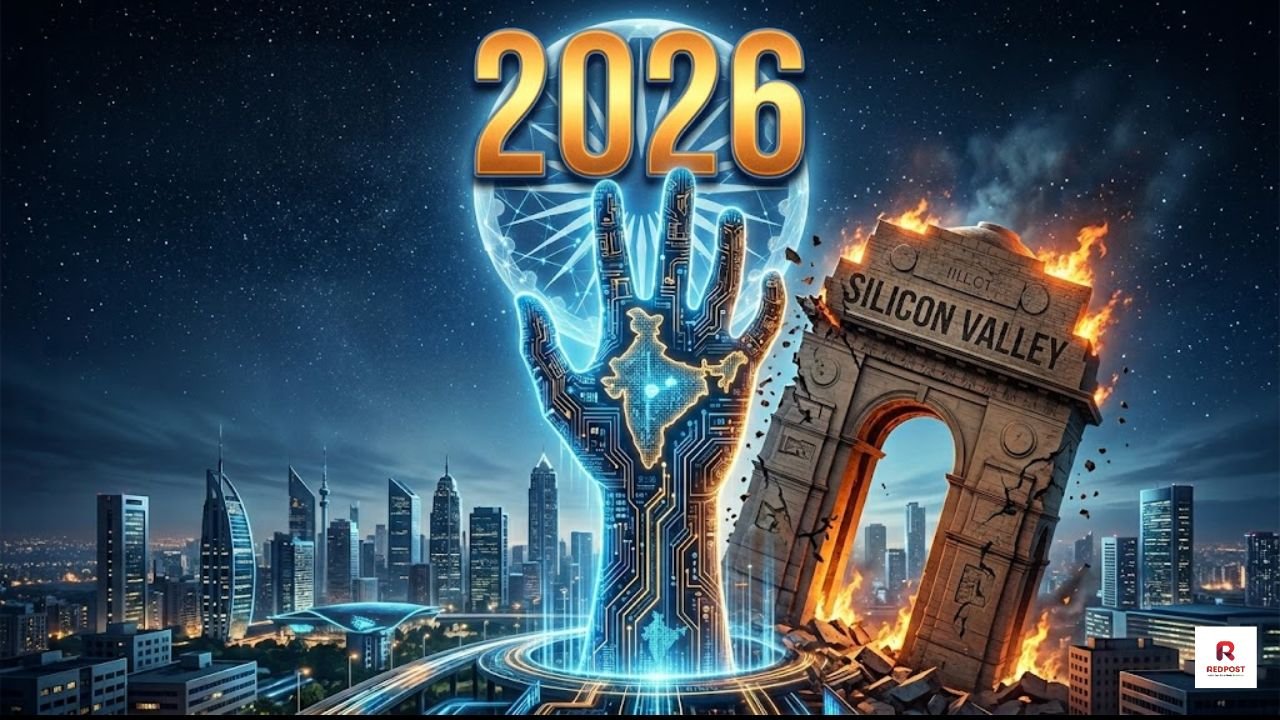
India boasts over 500 million social media users—the largest single national user base on the planet. Yet, as you scroll through your daily feed, every double-tap, share, and comment operates entirely on infrastructure owned by foreign tech giants. This invisible dependency has transformed from a digital convenience into a critical economic, legal, and geopolitical liability.
As we cross the mid-point of 2026, the question is no longer whether India can build its own digital public square, but why it can no longer afford not to. The current ecosystem leaves Indian data, discourse, and digital wealth heavily consolidated in foreign hands.
The Data Sovereignty Deficit
Under the current paradigm, the digital footprints of half a billion Indians reside on servers scattered across foreign jurisdictions, primarily the US, Ireland, and Singapore. While India’s Digital Personal Data Protection (DPDP) Act of 2023 established a robust framework for user privacy, enforcing these laws against trillion-dollar multinational conglomerates remains an uphill battle.
Foreign platforms frequently resist absolute data localization, leading to prolonged legal friction. A domestic platform, built from the ground up under Indian jurisdiction, would naturally align with a privacy-first design modeled on local laws. This would ensure that Indian citizens’ data remains protected, auditable, and stored natively within the country’s borders.
The reality of India’s current digital landscape is starkly reflected in the market share distribution:
| Platform | Indian Market Share (April 2026) |
| 42.19% | |
| 25.31% | |
| YouTube | 22.58% |
| Twitter / X | 5.58% |
| 1.62% |
The Algorithmic and Cultural Disconnect
More than 90% of social media consumption in India is mobile-first, driven heavily by a massive surge in regional language content. Feeds dominated by Hindi, Tamil, Bengali, Marathi, and Kannada are now the norm, not the exception.
Global algorithms are fundamentally optimized for maximizing watch-time and engagement through mechanisms calibrated for Western audiences. This creates significant operational gaps:
- Nuanced Moderation: Silicon Valley platforms consistently under-invest in regional Natural Language Processing (NLP) models. They struggle to parse the intricate cultural, caste, and religious nuances that define Indian societal friction.
- Misinformation Traps: Coordinated inauthentic behavior and deepfakes targeting Indian elections or local events require context-aware, immediate intervention—something global platforms fail to deploy effectively.
An indigenous platform could embed native multilingual support and localized, context-sensitive content discovery into its core architecture, ensuring safer and more relevant digital spaces.
Navigating the 2026 Regulatory Reality
The regulatory landscape grew significantly tighter with the enforcement of the IT Rules Amendment on February 20, 2026. The updated mandates introduce stringent criteria designed to combat digital manipulation:
The 2026 Compliance Threshold: Platforms must now implement mandatory labeling of AI-generated content, enforce a strict 3-hour takedown window for illegal or malicious deepfakes, and embed permanent cryptographic metadata to trace synthetic media.
When faced with these regulations, global tech companies often complain of overreach, delay compliance, or threaten to scale back features. A domestic alternative would eliminate this adversarial relationship, operating smoothly within local compliance frameworks from day one.
Keeping the Creator Wealth at Home
The Indian creator economy is booming, yet local creators face an steep economic disparity. Because cost-per-thousand-impressions (CPM) rates are significantly lower in developing markets, an Indian creator generating millions of views earns only a fraction of what a Western counterpart makes for the same volume of traffic.
Furthermore, a substantial chunk of ad revenue leaves the country, flowing straight back to foreign headquarters. A domestic platform could disrupt this by introducing higher revenue-sharing models, integrating seamlessly with India’s unified payments interface (UPI) ecosystem for micro-tips, and building hyper-local advertising tools tailored specifically for regional brands.
The Post-Mortem: Why Past Attempts Failed
To succeed, India must learn from its past tech experiments. Previous domestic contenders struggled to achieve mainstream traction due to distinct structural pitfalls:
- The Replication Trap: Apps like Koo tried to be direct clones of Twitter but failed to break the “network effect”—the reality that users will not migrate unless their friends do too.
- The Functional Ceiling: Short-video applications like Moj and ShareChat captured Tier-II and Tier-III markets but remained locked into niche formats rather than evolving into comprehensive social networks.
- The Ideological Echo Chamber: Platforms that relied too heavily on nationalist marketing or government backing lost organic public trust, alienating general users who desire an unbiased digital experience.
The Blueprint for a Neutral Indian Platform
If an Indian platform is to survive globally, it cannot function as an arm of state propaganda. It requires independent, transparent governance.
The ideal architecture would feature a governing board consisting of civil society leaders, technologists, and independent journalists alongside regulatory representatives. It must offer public algorithmic audits, end-to-end encryption by default, and user-controlled feed preferences—allowing individuals to choose chronological timelines over engagement-driven feeds.
Strategic independence in the digital age is about reducing systemic vulnerability. India does not need a platform built on hyper-nationalist rhetoric; it needs one built on superior, localized architecture that treats Indian citizens as stakeholders rather than data commodities.
What do you think? Are you ready to transition to a domestic social media network if it guarantees absolute data privacy and better regional content? Join the conversation in the comments below or share this article with your thoughts.
ALSO READ Why I Started RedPost – A New Social Media Journey